

























































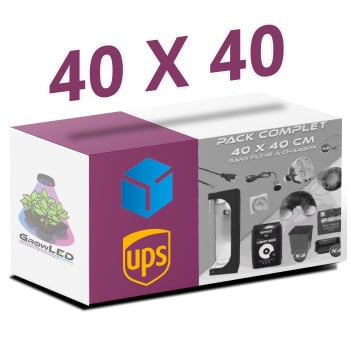
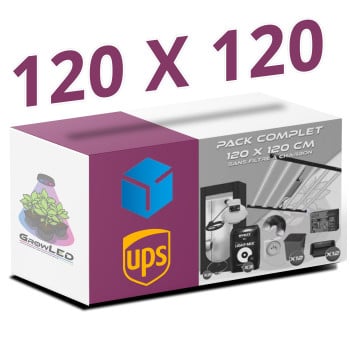
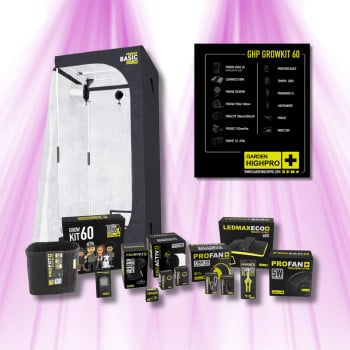
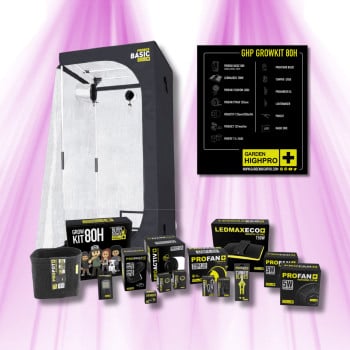
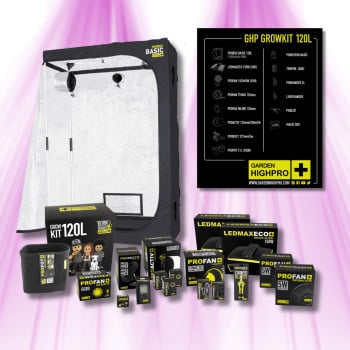

Pack complet 120x120cm – Zeus 600W PRO 2.9 et console - Box AQ 120+ 120x120x220…
Expédition sous 2 semaines
2 006,63 € 2 229,59 € ou 3× 668,88 €

Produit ajouté au panier avec succès
Ça pousse dans le bon sens

5 produits
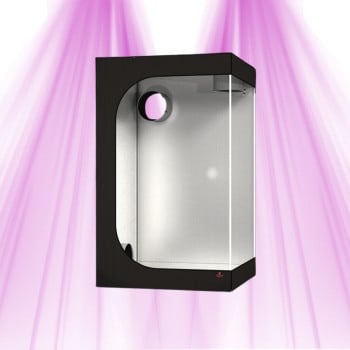
Les packs complets 120cm x 120cm représentent le format idéal pour débuter sérieusement en culture indoor sur 1,4m². Ces kits tout-en-un incluent la box de culture, l'éclairage, la ventilation et tous les accessoires nécessaires pour démarrer immédiatement. Avec cette surface, vous pouvez cultiver 4 à 6 plantes selon votre technique, que ce soit en terre, coco ou hydroponie.
Franchement, c'est la taille qui change tout quand on veut passer au niveau supérieur. Avec 1,4m² et une hauteur généralement de 200cm, vous avez enfin l'espace pour laisser vos plantes s'épanouir correctement. Les packs 120x120 intègrent des éclairages puissants - souvent entre 240W et 400W en LED ou 400W-600W en HPS - qui couvrent parfaitement cette surface. La ventilation est dimensionnée en conséquence avec des extracteurs de 200 à 315mm et des débits de 400 à 800 m³/h.
L'avantage majeur ? Tout est calculé pour fonctionner ensemble. L'extracteur est adapté au volume de la box (environ 2,9m³), le filtre à charbon correspond au débit d'air, et l'éclairage offre le bon PPFD sur toute la canopée. Plus de prise de tête avec les compatibilités ou les sous-dimensionnements qu'on voit souvent avec les montages maison.
Premier critère : le type d'éclairage. Les packs LED consomment moins (240-320W) et chauffent peu, parfait si votre local est déjà chaud. Les versions HPS (400-600W) chauffent plus mais certains cultivateurs jurent encore par leur spectre pour la floraison. Question budget, comptez 200-300W de LED pour couvrir correctement 1,4m² avec un PPFD de 600-800 µmol/m²/s.
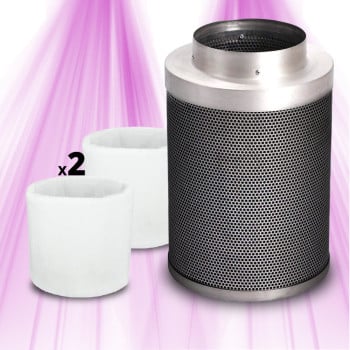
Côté ventilation, vérifiez que l'extracteur fait au minimum 400 m³/h - idéalement 600-800 m³/h pour renouveler l'air 15-20 fois par heure. Le filtre à charbon doit avoir la même capacité que l'extracteur. Pour la box elle-même, privilégiez les toiles épaisses (600D minimum) et les structures solides qui supporteront le poids de l'éclairage suspendu.
Le choix dépend surtout de votre environnement et budget électrique. Les packs LED 120x120 consomment 240-320W contre 400-600W pour les HPS, soit 40-50% d'économie sur la facture. Les LED chauffent moins, ce qui évite les problèmes de température l'été, mais certains cultivateurs préfèrent encore la chaleur des HPS en hiver. Niveau rendement, les LED modernes rivalisent largement avec les HPS, surtout avec les full spectrum qui couvrent mieux les besoins des plantes. Pour débuter, je recommande plutôt LED : moins de chaleur à gérer, consommation réduite et durée de vie supérieure (50 000h contre 10 000h).
L'installation suit une logique précise. Montez d'abord la structure de la box, puis fixez l'extracteur en haut avec le filtre à charbon à l'intérieur. L'intracteur passif se place en bas côté opposé pour créer un flux d'air diagonal. Pour l'éclairage, utilisez les sangles ajustables fournies et positionnez la lampe au centre, à 40-60cm des plantes selon la puissance. Vérifiez que les câbles ne touchent pas la toile et que l'extracteur évacue bien vers l'extérieur. Testez le tout 24h avant d'introduire vos plantes pour stabiliser température et hygrométrie.
La distance varie selon le type et la puissance de l'éclairage. Avec une LED de 240-320W, maintenez 40-50cm en croissance et 30-40cm en floraison. Pour une HPS 400W, comptez 50-60cm minimum pour éviter le stress thermique. Utilisez votre main comme test : si vous sentez une chaleur désagréable au niveau de la canopée, c'est trop près. Un luxmètre ou un appareil PPFD vous donnera des mesures précises : visez 300-500 µmol/m²/s en croissance et 600-900 µmol/m²/s en floraison. Ajustez régulièrement car les plantes grandissent et les besoins évoluent.
L'entretien régulier garantit l'efficacité du système. Nettoyez les pales des ventilateurs toutes les 2-3 semaines avec un pinceau sec pour éviter l'accumulation de poussière qui réduit le débit. Le filtre à charbon se change tous les 12-18 mois selon l'usage, mais vous pouvez prolonger sa vie en le secouant doucement tous les 2 mois pour décompacter le charbon. Vérifiez aussi les gaines : un pli ou une obstruction réduit drastiquement l'efficacité. Si l'odeur commence à passer malgré le filtre, c'est le signe qu'il faut le remplacer. Un manomètre sur l'extracteur vous indique la perte de charge et donc l'encrassement.
Les deux techniques fonctionnent parfaitement dans 1,4m². En terre, 4 plantes en pots de 11-15L permettent un développement optimal avec de la place pour circuler. 6 plantes demandent des pots plus petits (7-11L) et une taille plus stricte. L'hydroponie permet une densité plus élevée car les racines prennent moins de place : 6-9 plantes en système DWC ou NFT selon la variété. L'avantage de l'hydro : croissance plus rapide et contrôle précis des nutriments. Inconvénient : plus technique et risque de panne. Pour débuter, la terre reste plus tolérante aux erreurs. L'éclairage du pack couvre parfaitement les deux techniques, l'important étant d'adapter la hauteur selon la canopée finale.
Existe en 3 modèles
Aide & conseils
Sur 120cm x 120cm - 1,4m² — cliquez une question pour voir la réponse.
Pour une surface de 120cm x 120cm, ce que je recommande généralement est une puissance LED qui se situe entre 400W et 600W de consommation réelle. Cela permet d'assurer une couverture lumineuse homogène et suffisante pour toutes les phases de croissance de vos plantes, de la végétation à la floraison. En pratique, je vois souvent des cultivateurs obtenir d'excellents résultats avec cette gamme de puissance.
La distance d'installation d'une lampe LED dépend beaucoup de sa puissance et du modèle. En général, je recommande de commencer à une distance d'environ 40 à 60 cm des apex des plantes en phase de végétation, puis de l'ajuster à 30-45 cm en floraison. L'observation de vos plantes est cruciale : si les feuilles jaunissent ou se recroquevillent, la lumière est peut-être trop proche ; si elles s'étirent, elle est trop éloignée. N'hésitez pas à consulter les recommandations spécifiques du fabricant de votre lampe.
La principale différence réside dans l'efficacité et le spectre lumineux. Les LED sont très efficaces énergétiquement, produisent moins de chaleur et offrent un spectre personnalisable pour chaque phase de la plante. Les HPS (Sodium Haute Pression) sont puissantes et économiques à l'achat, mais consomment plus et dégagent beaucoup de chaleur. Les néons, quant à eux, sont plus adaptés aux jeunes pousses et à la végétation, mais manquent de puissance pour la floraison. Si je devais choisir pour une surface de 120x120, je pencherais clairement pour la LED pour sa polyvalence et son efficacité à long terme.
Sur une surface de 1,4m² (120cm x 120cm), vous pouvez raisonnablement cultiver entre 4 et 6 plantes. Ce nombre peut varier en fonction de la technique de culture que vous utilisez (SCROG, SOG, taille, etc.) et de la taille finale que vous souhaitez donner à vos plantes. L'objectif est de maximiser l'espace sans surcharger pour que chaque plante reçoive suffisamment de lumière et d'air.
Pour la végétation, je privilégie un spectre plus riche en bleu, qui favorise un développement compact et robuste des plantes. Pour la floraison, un spectre plus rouge et orangé est idéal, car il stimule la production de fleurs et de fruits. La plupart des lampes LED horticoles modernes proposent des spectres complets ou ajustables, ce qui est un avantage considérable pour optimiser chaque phase de culture. Certains modèles haut de gamme permettent même de moduler les ratios de couleurs.
Vous ne trouvez pas votre réponse ? 01 88 33 45 52 ou par message.

Satisfait ou remboursé
14 jours

Livraison offerte
dès 89€*

Livraison
24 à 48H

Paiement
sécurisé

Facilités de
paiement

Meilleurs prix
garantis

Garantie
GrowLED

Points de
fidélité


