




























































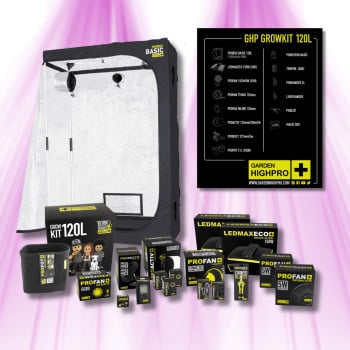


Garden HighPro
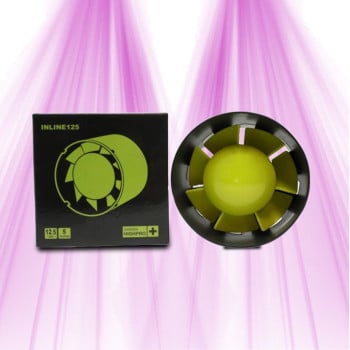
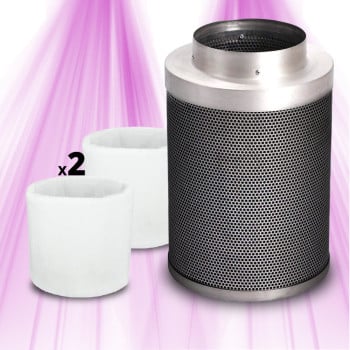
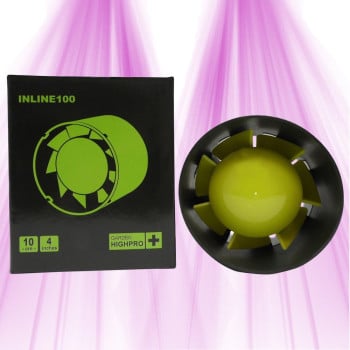
Garden HighPro PROFAN Ø 100 mm – extracteur de gaine 107 m³/h
Existe en 3 modèles
En stock · Expédié sous 24 h
17,60 €

Produit ajouté au panier avec succès
Ça pousse dans le bon sens

20 produits
Air extractors are the lungs of your indoor growing setup. They remove hot, humid air while creating negative pressure that draws in fresh air. Without an efficient extraction system, your plants risk suffocating in stale air, with rising temperatures and stagnant humidity.
A good air extractor keeps your grow space within optimal parameters. It removes heat generated by your lights, regulates humidity, and ensures a constant supply of fresh CO2. Power is measured in m³/h: for an 80x80x160 cm grow tent (approximately 1m³), aim for a minimum of 150-200 m³/h without a carbon filter. With a filter, increase by 30% as it creates resistance.
Centrifugal extractors are quieter than axial fans, crucial if your grow is near living areas. Some models go below 25 dB, others reach 45 dB. The difference is noticeable, especially at night. Extractors with speed controllers allow you to adjust the flow rate as needed: stronger during flowering when humidity increases, gentler during vegetative growth.
First criterion: calculate the volume of your space (length x width x height) and multiply by 60 to get the minimum hourly flow rate. For a 120x120x200 cm grow tent (2.88 m³), aim for a minimum of 170 m³/h. If you use a carbon filter, add a 20-30% extra margin.
Second point: noise level. Below 30 dB, it's truly silent. Between 30-40 dB, it remains discreet. Above 45 dB, it starts to become noticeable. "Turbine" type centrifugal extractors are generally quieter than classic axial fans.
Third criterion: compatibility with your ducts. Standard diameters are 100mm, 125mm, 150mm, and 200mm. The larger the diameter, the less resistance and noise for the same flow rate. A 150mm extractor at 300 m³/h will be quieter than a 125mm at the same flow rate.
Your grow tent is 1.024 m³ (0.8 x 0.8 x 1.6). Multiply by 60 to get a minimum of 61 m³/h, but this is truly the bare minimum. In practice, aim for 150-200 m³/h for good air exchange. With a carbon filter, add a 30% margin as it restricts airflow: so, count on 200-260 m³/h. A 250-300 m³/h extractor will be perfect, with the option to reduce speed if needed.
Absolutely, it's even crucial for your peace of mind. An extractor running 18 hours/day at 45 dB quickly becomes unbearable. Prioritize models below 30 dB or with a speed controller to reduce the speed at night. "Mixed-flow" type centrifugal extractors are generally quieter than axial fans. You can also install silencers on the air intake and exhaust ducts.
The extractor is always placed outside the grow tent, connected by a duct to the hot air outlet point (at the top of the tent). This configuration avoids adding heat to the grow space and facilitates maintenance. If you use a carbon filter, it is placed inside the tent, connected to the extractor by a duct. Air first passes through the filter, then is expelled by the extractor.
Not necessarily, it depends on your setup. The extractor creates negative pressure that naturally draws fresh air through passive inlets (holes with grilles). For small grow tents (less than 2 m³), this passive intake is largely sufficient. For larger setups or if you have temperature problems, an intake fan can help force fresh air in. General rule: the intake fan should have a lower flow rate than the extractor to maintain slight negative pressure.
The carbon filter should be changed every 12-18 months depending on usage and air quality. You'll know it's saturated when odors start to pass through despite the extraction system. For maintenance, regularly dust the pre-filter (white sock) by washing or replacing it. The activated carbon itself cannot be cleaned; the entire filter must be replaced. Store new filters in a dry place, as humidity degrades activated carbon even when unused.
Existe en 3 modèles
Existe en 3 modèles
Existe en 3 modèles
Existe en 2 modèles
Existe en 2 modèles
Existe en 2 modèles
Existe en 6 modèles
Existe en 3 modèles
Existe en 3 modèles
Existe en 6 modèles
Existe en 6 modèles
Existe en 3 modèles
Aide & conseils
Sur Extracteurs d'air — cliquez une question pour voir la réponse.
Pour choisir un extracteur d'air, je vous conseille de prendre en compte plusieurs facteurs clés. Premièrement, la taille de votre espace de culture est primordiale pour déterminer le débit nécessaire. Ensuite, le niveau sonore est important, surtout si votre installation est proche d'une pièce de vie. Enfin, je recommande de considérer les options de contrôle, comme un variateur de vitesse, pour une gestion plus fine de votre environnement.
Pour calculer la puissance nécessaire, je vous propose une méthode simple : multipliez le volume de votre espace de culture (longueur x largeur x hauteur) par 60. Cela vous donnera le débit d'air en m³/h pour un renouvellement complet toutes les minutes, ce qui est une bonne base. N'oubliez pas d'ajouter une marge de sécurité de 10 à 20% pour compenser les pertes de charge dues aux gaines et filtres.
La différence est fondamentale : l'extracteur expulse l'air vicié et chaud de votre espace de culture, tandis que l'intracteur introduit de l'air frais et neuf. En pratique, l'extracteur est généralement plus puissant pour créer une dépression et éviter les odeurs. Je conseille souvent d'avoir un intracteur passif (une simple ouverture) ou un intracteur actif de moindre puissance que l'extracteur pour maintenir cette dépression.
Un extracteur d'air est le poumon de votre culture indoor, comme je l'ai mentionné. Il sert principalement à évacuer l'air chaud et humide produit par les lampes et la transpiration des plantes, à renouveler le CO2 essentiel à la photosynthèse, et à maintenir une température et une humidité optimales. Sans lui, vos plantes souffriraient rapidement de stress thermique et de problèmes fongiques.
Si vous cultivez des plantes à forte odeur, je vous recommande vivement d'utiliser un filtre à charbon actif. Il se connecte directement à votre extracteur et permet de neutraliser efficacement les odeurs avant que l'air ne soit expulsé. C'est un investissement essentiel pour la discrétion de votre culture et le confort de votre entourage. Vous trouverez des accessoires pour extracteurs, y compris des filtres, sur notre site.
La principale différence réside, comme son nom l'indique, dans le niveau sonore. Les extracteurs silencieux sont conçus avec des matériaux isolants et des moteurs spécifiques pour réduire au maximum le bruit de fonctionnement, ce qui est idéal pour les installations en intérieur. Les extracteurs classiques sont souvent plus bruyants mais aussi généralement plus économiques. Si je devais choisir pour une pièce de vie, j'opterais sans hésiter pour un modèle silencieux.
En général, je conseille d'installer l'extracteur à l'extérieur de la tente de culture. Cela permet d'économiser de l'espace précieux à l'intérieur et de réduire la chaleur dégagée par le moteur de l'extracteur directement dans l'espace de culture. Cependant, si vous utilisez un filtre à charbon, il sera souvent positionné à l'intérieur, connecté à l'extracteur via une gaine.
Vous ne trouvez pas votre réponse ? 01 88 33 45 52 ou par message.

Satisfait ou remboursé
14 jours

Livraison offerte
dès 89€*

Livraison
24 à 48H

Paiement
sécurisé

Facilités de
paiement

Meilleurs prix
garantis

Garantie
GrowLED

Points de
fidélité