



























































Gorilla Grow Tent
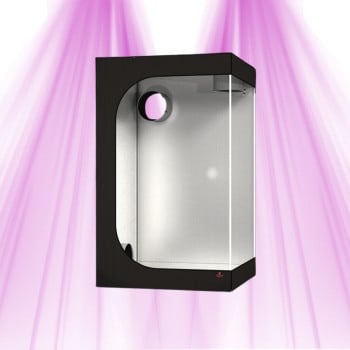
Chambre de culture - Gorilla Shorty Indoor - 90x90x150 / 170cm
Existe en 2 modèles
En stock · Expédié sous 24 h
399,90 € ou 3× 133,30 €

Produit ajouté au panier avec succès
Ça pousse dans le bon sens

5 produits
Les box de culture 90x90cm représentent le format intermédiaire idéal pour qui veut passer au niveau supérieur sans exploser l'espace disponible. Avec 0,81m² au sol et généralement 180cm de hauteur, ces tentes offrent un volume de culture confortable pour 4 à 9 plantes selon votre technique de culture. C'est le sweet spot entre les petites box 60x60 et les grandes installations 120x120.
Cette dimension frappe dans le mille pour plusieurs raisons concrètes. D'abord, elle accepte parfaitement les lampes LED de 200 à 400W ou une HPS 400W, ce qui donne une densité lumineuse de 250 à 500 PPFD selon la hauteur d'accrochage. Ensuite, la ventilation reste gérable avec un extracteur 150mm tournant à 400-600 m³/h, sans faire un boucan d'enfer.
Niveau culture, c'est là que ça devient intéressant. En SOG (Sea of Green), tu peux facilement caser 9 pots de 11L en carré 3x3. En SCROG (Screen of Green), 4 plantes bien étoffées remplissent parfaitement l'espace. Et pour du LST classique, 6 plantes en pots de 15L trouvent leur place sans se marcher dessus. La hauteur de 180cm laisse 40-50cm pour l'éclairage et l'extraction, soit 130cm utiles pour les plantes.
Les structures modernes utilisent des tubes de 16mm en acier revêtu, largement suffisants pour supporter 15-20kg d'équipement suspendu. Les toiles mylar 210D réfléchissent 95% de la lumière, et franchement, c'est là que ça change tout niveau rendement comparé à une pièce peinte en blanc.
Premier critère : l'épaisseur de la toile. Une 210D minimum, idéalement 600D pour les versions renforcées. Plus c'est épais, moins ça fuit de lumière et plus c'est résistant aux accrocs. Les fermetures éclair doivent être robustes, de préférence en métal, parce que c'est ce qui lâche en premier sur les modèles cheap.
Côté structure, vérifiez le diamètre des tubes : 16mm c'est correct, 19mm c'est mieux pour la rigidité. Les connecteurs en plastique moulé tiennent mieux que les pièces assemblées. Comptez aussi les ouvertures : il faut au minimum une sortie haute pour l'extraction, une entrée basse pour l'air frais, et des passages étanches pour les câbles.
Pour la hauteur, 180cm reste le standard mais certains modèles montent à 200cm. Ces 20cm supplémentaires peuvent faire la différence si vous cultivez des variétés qui s'étirent beaucoup en floraison. Par contre, vérifiez que votre plafond suit.
Dernier point crucial : les plateaux de sol. Certaines box sont livrées avec, d'autres non. Un plateau étanche évite les dégâts d'eau et facilite le nettoyage. Si il n'y en a pas, prévoyez une bâche de protection sous la box.
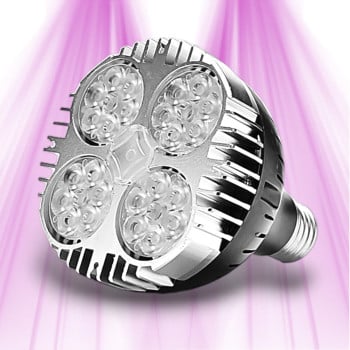
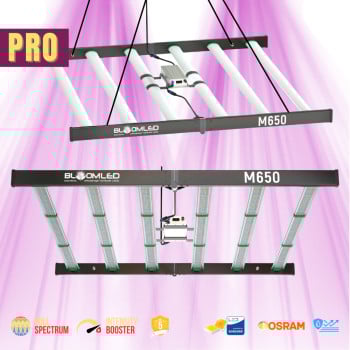
Pour 0,81m², visez 250 à 400W en LED full spectrum ou une HPS 400W maximum. En LED, une lampe de 300W type quantum board donne environ 370 PPFD à 60cm de distance, parfait pour la croissance et la floraison. Avec une HPS 400W, restez à 50-60cm minimum pour éviter le stress thermique. Les LED Samsung LM301B ou Osram sont actuellement ce qui se fait de mieux niveau efficacité lumineuse.
Ça dépend totalement de votre technique. En SOG avec 3 semaines de croissance, 9 plantes en pots 11L espacées de 30cm fonctionnent nickel. En SCROG, 4 plantes suffisent largement avec un filet à 40cm du sol. Pour du LST classique, 6 plantes en pots 15L avec 35-40cm d'espacement donnent de beaux résultats. L'important c'est que l'air circule bien entre les plantes.
Montez d'abord la structure complètement avant d'enfiler la toile, c'est moins galère. Dépliez la toile dans une pièce propre, vérifiez qu'il n'y a pas d'objets pointus au sol. Enfilez-la par le haut en tirant doucement sur les angles, jamais en force. Les fermetures éclair doivent être ouvertes pendant le montage pour éviter les tensions. Une fois en place, vérifiez que tous les velcros sont bien alignés avant de fermer.
Pour 1,45m³ (90x90x180), un extracteur 150mm de 400-600 m³/h fait l'affaire, avec un variateur pour ajuster selon la température. Ajoutez un ventilateur oscillant de 15-20cm pour brasser l'air en permanence. L'entrée d'air passif doit faire 1,5 fois la section de sortie, soit du 200mm ou deux entrées 150mm. Avec une HPS, poussez la ventilation à 600 m³/h minimum pour évacuer la chaleur.
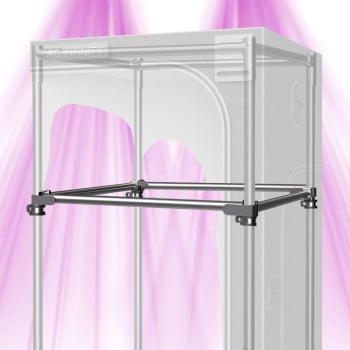
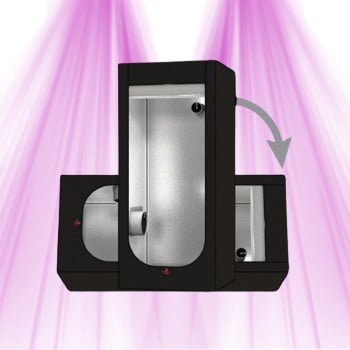
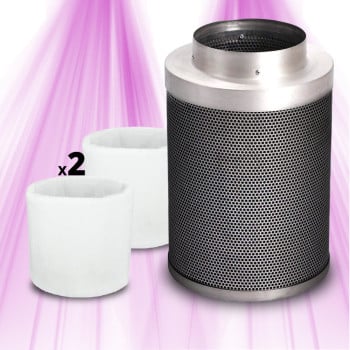
Un space booster n'est pas obligatoire sur du 90x90 si la structure fait 16mm minimum, mais ça aide si vous suspendez plus de 15kg d'équipement. Il se fixe en diagonale entre les tubes du plafond, créant une triangulation qui rigidifie l'ensemble. Montez-le après avoir installé la toile, en passant par l'intérieur de la box. Ça évite l'affaissement du plafond quand vous accrochez extracteur, lampe et éventuellement un filtre à charbon.
Existe en 2 modèles
Existe en 3 modèles
Existe en 4 modèles
Existe en 5 modèles
Existe en 4 modèles
Aide & conseils
Sur 90cm x 90cm — cliquez une question pour voir la réponse.
Pour une box de culture 90x90cm, je recommande une lampe LED qui couvre efficacement une surface de 0,81m². En général, je conseille de viser une puissance réelle consommée d'environ 250 à 350 watts pour une floraison optimale. Les panneaux LED de type barre ou les modèles à spectre complet sont particulièrement adaptés pour une répartition homogène de la lumière sur toute la surface.
En pratique, pour une box 90x90cm, je vise une puissance LED d'environ 250 à 350 watts réels à la prise. Cette fourchette permet d'assurer un éclairage suffisant pour toutes les phases de croissance de vos plantes, de la germination à la floraison. Une puissance trop faible limitera votre rendement, tandis qu'une puissance excessive pourrait générer trop de chaleur ou être surdimensionnée pour cet espace.
Le nombre de plantes dans une box 90x90cm dépend beaucoup de votre technique de culture. Si vous optez pour des plantes de taille moyenne avec une période de croissance raisonnable, je dirais que 4 à 6 plantes sont un bon équilibre. Si vous maîtrisez des techniques comme le SCROG ou le One-Bud, vous pourriez aller jusqu'à 9 plantes, mais cela demandera plus d'attention et de gestion de l'espace.
La principale différence, c'est bien sûr l'espace ! Une box 90x90cm offre 0,81m² de surface au sol contre 0,36m² pour une 60x60cm. Cela signifie plus de volume pour les plantes, la possibilité de cultiver plus d'individus ou des plantes plus grandes, et souvent une meilleure gestion de l'environnement grâce à un volume d'air plus important. C'est vraiment le bon compromis pour passer au niveau supérieur sans empiéter sur tout votre espace de vie.
La distance idéale entre votre lampe LED et la canopée de vos plantes dans une box 90x90cm est cruciale. Elle dépend de la puissance de votre LED et du stade de croissance. En général, je commence à 40-60 cm en début de croissance et je descends progressivement jusqu'à 25-40 cm en pleine floraison, en surveillant toujours les signes de stress sur les plantes. L'objectif est d'optimiser l'intensité lumineuse sans brûler les feuilles.
Pour une box 90x90cm, je privilégie clairement les LED par rapport aux HPS. Les LED sont bien plus efficaces énergétiquement, génèrent moins de chaleur (ce qui simplifie la gestion de la température dans un espace confiné) et offrent un spectre lumineux plus adapté aux besoins des plantes. De plus, leur durée de vie est bien supérieure. J'explique d'ailleurs comment réduire votre consommation électrique dans cet article.
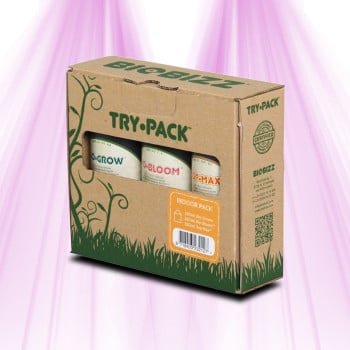
Ce que je vois souvent comme erreurs, c'est d'abord une mauvaise gestion de la ventilation, essentielle pour renouveler l'air et contrôler l'humidité. Ensuite, un arrosage excessif ou insuffisant est très courant. Enfin, il faut éviter de sous-estimer l'importance de la qualité du substrat ; pour cela, je vous invite à consulter cet article sur les substrats écologiques ou celui sur les terreaux Biobizz. Une bonne compréhension de ces bases est la clé du succès.
Vous ne trouvez pas votre réponse ? 01 88 33 45 52 ou par message.

Satisfait ou remboursé
14 jours

Livraison offerte
dès 89€*

Livraison
24 à 48H

Paiement
sécurisé

Facilités de
paiement

Meilleurs prix
garantis

Garantie
GrowLED

Points de
fidélité