




























































BloomLED
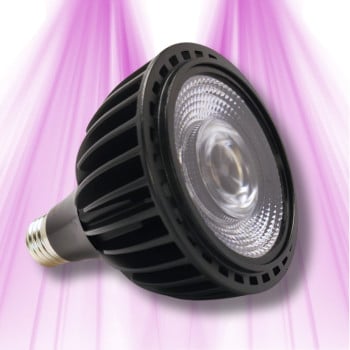
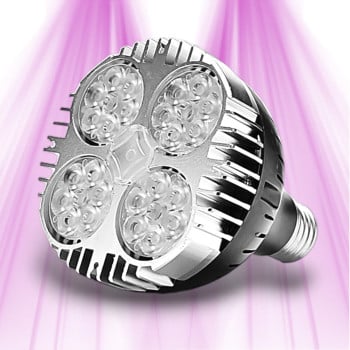
Ampoule horticole LED E27 pour plantes SpectraBULB X30 - 35W
Existe en 3 modèles
En stock · Expédié sous 24 h
85,90 € ou 3× 28,63 €

Produit ajouté au panier avec succès
Ça pousse dans le bon sens

7 produits
Une superficie d'éclairage 40cm x 40cm - 0,2m² correspond parfaitement aux petites installations de culture indoor ou aux espaces dédiés aux jeunes plants. Cette surface compacte demande un éclairage précis et adapté pour maximiser le rendement sans gaspiller d'énergie. Que ce soit pour une box de démarrage, un espace de bouturage ou une culture en pot unique, choisir la bonne lampe LED pour ces dimensions fait toute la différence.
Franchement, éclairer correctement 0,2m² n'est pas si évident qu'il y paraît. Trop de puissance et vous cramez vos plants, pas assez et ils s'étiolent. Les lampes LED modernes offrent un contrôle précis de l'intensité lumineuse avec des PPFD (densité de flux photonique photosynthétique) ajustables entre 200 et 800 µmol/m²/s selon le stade de croissance. Pour cette superficie, une lampe de 30 à 60 watts suffit largement, contrairement aux anciennes HPS qui nécessitaient 150W minimum pour la même surface.
L'avantage majeur des LED sur 40x40cm, c'est la gestion thermique. Avec une lampe bien dimensionnée, la température reste stable autour de 24-26°C sans ventilation forcée supplémentaire. Les diodes Samsung LM301B ou LM301H génèrent moins de 0,3W de chaleur par watt consommé, contre 0,8W pour les HPS. Résultat : vos plants poussent dans des conditions optimales sans stress thermique.
Pour une superficie de 40cm x 40cm, plusieurs critères déterminent le choix de votre éclairage LED. D'abord la puissance : comptez 150 à 300 watts par m², soit 30 à 60 watts réels pour vos 0,2m². Attention aux watts "équivalents" souvent trompeurs sur les fiches produits. Vérifiez toujours la consommation réelle indiquée en petits caractères.
Le spectre lumineux joue un rôle crucial sur cette petite surface. Un spectre complet 3000K-6500K avec des pics dans le rouge (660nm) et le bleu (450nm) couvre tous les besoins photosynthétiques. Les lampes avec variateur permettent d'ajuster l'intensité : 40% pour les semis, 70% en croissance, 100% en floraison. C'est là que ça change tout niveau flexibilité.
La hauteur d'installation varie selon la puissance : 30-40cm pour une 30W, 40-60cm pour une 60W. Un bon indicateur : si vous pouvez tenir votre main 30 secondes sous la lampe sans inconfort, c'est la bonne distance. Les lampes avec optiques 90° ou 120° répartissent mieux la lumière sur cette surface carrée que les optiques 60°.
Pour 0,2m², une lampe de 30 à 50 watts réels suffit amplement. En dessous de 30W, vous risquez un éclairage insuffisant en floraison. Au-dessus de 60W, vous entrez dans la zone de surchauffe sans gain de rendement. Les lampes Samsung ou Osram dans cette gamme maintiennent une température de surface autour de 45°C, parfaitement gérable. Privilégiez les modèles avec dissipateur aluminium et évitez les lampes sans refroidissement passif qui montent à 70°C+.
La hauteur optimale dépend de la puissance et du stade de culture. Pour une 30W, démarrez à 45cm des plants et descendez progressivement à 30cm en fin de croissance. Avec une 50W, commencez à 60cm et stabilisez à 40cm. L'uniformité se vérifie simplement : mesurez l'intensité lumineuse aux quatre coins avec un luxmètre, l'écart ne doit pas dépasser 20%. Si les bords reçoivent moins de lumière, remontez légèrement la lampe.
Les lampes LED full spectrum couvrent parfaitement les deux phases sur 40x40cm. En croissance, utilisez 60-70% de la puissance avec un spectre riche en bleu (6500K) pour favoriser le développement foliaire. En floraison, passez à 100% avec dominante rouge (3000K) pour stimuler la production de fleurs et d'huiles essentielles. Les plantes aromatiques comme le basilic, la menthe ou le thym répondent excellemment à ce protocole avec des récoltes 30% supérieures aux cultures sous néons.
L'entretien d'une LED sur cette superficie reste minimal mais crucial pour la longévité. Nettoyez les diodes tous les 15 jours avec un chiffon microfibre légèrement humide pour éliminer la poussière qui réduit l'efficacité de 15% en 6 mois. Vérifiez que les ailettes du dissipateur ne sont pas obstruées, surtout en culture avec forte humidité. Évitez les chocs thermiques en laissant refroidir 10 minutes avant extinction complète. Une LED bien entretenue garde 90% de sa puissance après 50 000 heures, soit 10 ans d'utilisation normale.
Un timer programmable est indispensable pour respecter les photopériodes : 18h/6h en croissance, 12h/12h en floraison. Les timers mécaniques suffisent pour cette puissance, pas besoin de modèles électroniques coûteux. Concernant le réflecteur, c'est moins évident sur 0,2m². Les lampes LED modernes intègrent déjà des optiques dirigeant 95% de la lumière vers le bas. Un réflecteur n'apporte que 5-10% d'efficacité supplémentaire, souvent compensé par l'augmentation de température qu'il génère dans un espace si restreint.
Existe en 3 modèles
Existe en 3 modèles
Existe en 3 modèles
Aide & conseils
Sur 40cm x 40cm - 0,2m² — cliquez une question pour voir la réponse.
Pour une surface de 40cm x 40cm (0,2m²), je recommande généralement une puissance LED comprise entre 50 et 80 Watts réels. Cette plage permet d'assurer une intensité lumineuse suffisante pour la croissance et la floraison de la plupart des plantes, sans surchauffer votre petit espace. Si vous optez pour des plantes très gourmandes en lumière, vous pourriez monter légèrement, mais soyez vigilant à la gestion de la chaleur.
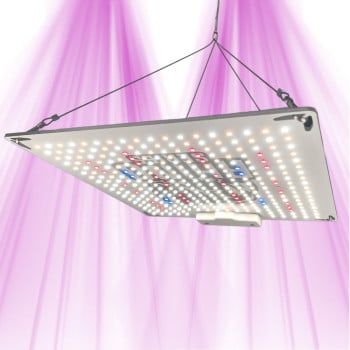
Pour cette petite surface, je vous conseille de privilégier les lampes LED avec un bon PAR (Photosynthetic Active Radiation) et une répartition lumineuse homogène. Recherchez des modèles compacts, souvent sous forme de barres ou de petits panneaux, qui s'adapteront bien à l'espace. Pensez également à la facilité d'installation et à la présence d'un dissipateur thermique efficace pour éviter les problèmes de chaleur. Si vous avez des besoins spécifiques, comme une culture intensive, cela pourrait influencer votre choix vers des modèles plus performants.
La distance d'installation dépend beaucoup de la puissance de votre LED et du stade de croissance de vos plantes. En général, pour une LED de 50-80W sur 40x40cm, je commence par positionner la lampe à environ 30-40 cm des jeunes pousses. Au fur et à mesure de la croissance, je peux ajuster cette distance, souvent en la rapprochant un peu (20-30 cm) pour les plantes plus matures et en floraison, tout en surveillant attentivement les signes de stress lumineux sur les feuilles.
L'erreur la plus fréquente que je vois est de sous-estimer la gestion de la chaleur, même sur une petite surface. Une LED trop puissante ou mal ventilée peut rapidement faire monter la température. Évitez aussi de choisir un spectre lumineux inadapté, ou de ne pas ajuster la distance de la lampe. Enfin, ne négligez pas l'importance d'un bon cycle lumineux ; un éclairage constant n'est pas toujours bénéfique pour toutes les plantes.
Pour une culture polyvalente sur 0,2m², je recommande un spectre complet (full spectrum). C'est le plus versatile et il convient à toutes les phases de croissance, des semis à la floraison. Si vous avez des besoins plus spécifiques, par exemple pour le bouturage ou la croissance végétative uniquement, un spectre avec une dominante de bleu peut être intéressant. Pour la floraison, un spectre enrichi en rouge favorisera la production de fleurs et de fruits. Pour des autres usages, un spectre plus spécifique pourrait être envisagé.
Le nombre d'heures de lumière dépend entièrement du stade de développement de vos plantes. Pour la phase végétative, je conseille généralement un cycle de 18 heures de lumière et 6 heures d'obscurité. Pour la floraison, la plupart des plantes photopériodiques nécessitent un cycle de 12 heures de lumière et 12 heures d'obscurité. Il est crucial de respecter ces cycles pour le bon développement de vos cultures.
Vous ne trouvez pas votre réponse ? 01 88 33 45 52 ou par message.

Satisfait ou remboursé
14 jours

Livraison offerte
dès 89€*

Livraison
24 à 48H

Paiement
sécurisé

Facilités de
paiement

Meilleurs prix
garantis

Garantie
GrowLED

Points de
fidélité