




























































Lumatek
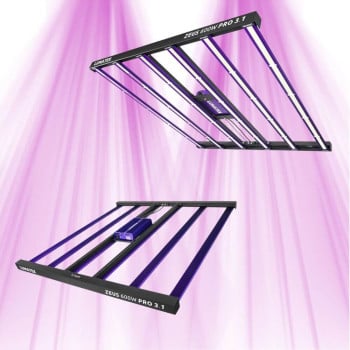
Lumatek Zeus 600W PRO 3.1 - Système Multi-Barres par Lumatek - Vendu complet
Existe en 5 modèles
En stock · Expédié sous 24 h
1 089,00 € ou 3× 363,00 €

Produit ajouté au panier avec succès
Ça pousse dans le bon sens

26 produits
Une superficie d'éclairage de 140cm x 140cm représente exactement 2m² de zone de culture, une taille intermédiaire parfaite pour les cultivateurs qui veulent monter en gamme sans exploser leur budget électrique. Cette surface demande un éclairage précis et bien dimensionné pour éviter les zones d'ombre qui ruinent une récolte. Que tu optes pour du LED ou du HPS, chaque détail compte pour maximiser tes rendements sur ces 2m².
Sur 2m², tu joues dans la cour des moyens. Trop peu de puissance et tes plantes s'étiolent sur les bords, trop et tu crameras ton électricité pour rien. L'avantage de cette superficie, c'est qu'elle permet d'installer une lampe centrale puissante qui couvre uniformément toute la zone. En LED, on table généralement sur 300-400W réels pour cette surface, soit environ 150-200W/m². En HPS, une 600W fait parfaitement l'affaire, même si elle chauffe plus.
La clé, c'est l'uniformité lumineuse. Sur 140x140cm, tu peux te permettre une seule source centrale bien positionnée plutôt que plusieurs petites lampes. Ça simplifie l'installation, réduit les points de chaleur et optimise la pénétration lumineuse. Franchement, c'est la superficie où on commence à voir de vrais résultats sans se ruiner.
Premier critère : la puissance réelle. Pour 2m², vise 300-400W en LED full spectrum ou une 600W HPS. La distance de suspension joue énormément : 40-60cm pour du LED selon la puissance, 60-80cm pour du HPS. Trop près et tu brûles les apex, trop loin et tu perds en intensité lumineuse.
Deuxième point crucial : la répartition spectrale. En croissance, privilégie un spectre riche en bleu (6000-6500K), en floraison bascule vers du rouge-orange (2700-3000K). Les LED modernes offrent souvent des spectres mixtes qui fonctionnent du début à la fin, mais les HPS restent des valeurs sûres pour la flo.
N'oublie pas la gestion thermique. Sur 2m², une 600W HPS peut vite transformer ta box en sauna. Assure-toi d'avoir une extraction suffisante (au minimum 400m³/h) et un réflecteur refroidi par air si nécessaire. Le LED chauffe moins mais coûte plus cher à l'achat.
Pour couvrir uniformément 2m² sans zones mortes, table sur 300-400W réels en LED ou une 600W HPS. En LED, cherche des modèles avec un angle de diffusion large (120° minimum) pour éviter le hot spot central. Une LED de 350W bien conçue éclaire parfaitement cette surface avec une répartition homogène. En HPS, la 600W reste la référence : elle couvre largement les 140x140cm avec un bon réflecteur. Évite les 400W HPS qui laissent souvent les coins dans l'ombre, et les 1000W qui sont du gaspillage pur sur cette superficie.
La distance varie selon la technologie et la phase. En croissance, suspend ton LED à 50-70cm des jeunes plants, puis rapproche à 40-50cm quand elles grandissent. Pour du HPS 600W, commence à 80cm en croissance puis descend à 60-70cm en floraison. Le truc, c'est de surveiller la température au niveau des feuilles : si tu peux garder ta main 30 secondes sous la lampe sans brûlure, c'est bon. Ajuste selon la réaction de tes plantes : feuilles qui se recroquevillent = trop près, tiges qui s'étirent = trop loin.
Ça dépend de ton budget et de ta situation. Le HPS 600W coûte moins cher à l'achat (150-200€ complet) et donne des résultats prouvés, surtout en floraison. Par contre, il consomme plus (ballast inclus, on frôle les 660W) et chauffe énormément. Le LED coûte plus cher (400-800€ pour du quality) mais consomme 30-40% de moins et chauffe beaucoup moins. Sur 2m², si tu as une bonne extraction et que le budget est serré, va sur du HPS. Si tu veux investir dans la durée et économiser sur l'électricité, prends du LED full spectrum de qualité.
Installe un timer mécanique ou digital entre ta prise murale et ta lampe. Pour la croissance, règle sur 18h de lumière et 6h d'obscurité (18/6). Démarre l'éclairage vers 6h du matin pour profiter des heures creuses si tu as ce tarif. Pour déclencher la floraison, passe en 12/12 : 12h de jour, 12h de nuit stricte. L'obscurité doit être totale pendant les 12h de nuit, même pas une LED rouge. Sur 2m², une seule lampe = un seul timer, c'est simple. Vérifie que ton timer supporte la puissance de ta lampe (660W minimum pour du HPS 600W avec ballast).
Nettoie ton réflecteur et ta vitre toutes les 2-3 semaines avec de l'alcool isopropylique : la poussière peut réduire l'efficacité de 20%. Pour les LED, dépoussiére les dissipateurs thermiques avec un pinceau sec ou de l'air comprimé tous les mois. Change ton ampoule HPS tous les 3-4 cycles (elle perd 20% d'intensité après 10 000h). Vérifie régulièrement que ton ballast ne chauffe pas anormalement et que les connexions sont propres. Sur 2m², une lampe mal entretenue peut créer des zones de sous-éclairage qui impactent directement tes rendements.
Existe en 5 modèles
Existe en 3 modèles
Existe en 7 modèles
Existe en 3 modèles
Existe en 4 modèles
Existe en 2 modèles
Aide & conseils
Sur 140cm x 140cm - 2m² — cliquez une question pour voir la réponse.
Pour une surface de 140cm x 140cm (soit 2m²), je recommande généralement une puissance LED de 600 à 800 watts réels. Cela permet d'assurer une couverture lumineuse homogène et une intensité suffisante pour toutes les phases de croissance de vos plantes, de la germination à la floraison. Une puissance trop faible entraînerait des rendements décevants, tandis qu'une puissance excessive serait un gaspillage d'énergie et pourrait stresser vos cultures.
La principale différence, et celle qui me fait souvent pencher vers le LED, est l'efficacité énergétique et la gestion thermique. Les LED consomment moins d'électricité pour une même quantité de lumière utile (PPF) et dégagent beaucoup moins de chaleur que les HPS, ce qui simplifie grandement le contrôle de la température dans votre espace de culture de 2m². De plus, les LED offrent un spectre lumineux plus complet et souvent modulable, ce qui est un avantage considérable pour s'adapter aux besoins spécifiques de vos plantes à chaque étape.
La distance idéale entre votre lampe LED et vos plantes sur 2m² dépendra beaucoup de la puissance de votre luminaire et du stade de développement des plantes. En général, je commence avec une distance d'environ 50 à 70 cm pour les jeunes pousses et je la réduis progressivement à 30-40 cm en pleine floraison pour maximiser l'intensité lumineuse. Il est crucial d'observer vos plantes : si les feuilles jaunissent ou se recroquevillent, la lumière est peut-être trop proche ; si elles s'étirent, elle est trop éloignée.
L'erreur la plus courante que je vois est de sous-estimer la puissance nécessaire ou de mal gérer la distance, ce qui conduit à des plantes étiolées ou brûlées. Il faut aussi éviter de négliger la ventilation, même si les LED chauffent moins, un bon renouvellement d'air reste essentiel. Enfin, ne pas adapter le spectre lumineux aux différentes phases de croissance et de floraison est une opportunité manquée pour optimiser vos rendements. Pensez à explorer les options pour autres usages si vous avez des besoins spécifiques comme la culture de boutures.
Le cycle lumineux dépend de la phase de croissance de vos plantes. Pour la phase végétative, je recommande un cycle de 18 heures de lumière et 6 heures d'obscurité. Une fois que vous passez en floraison, il faut réduire ce cycle à 12 heures de lumière et 12 heures d'obscurité pour stimuler la production de fleurs. Respecter ces cycles est fondamental pour le bon développement hormonal de vos cultures.
Idéalement, je conseille un spectre complet (full spectrum) pour toute la durée de vie de la plante, car il imite au mieux la lumière naturelle du soleil et contient toutes les longueurs d'onde nécessaires. Cependant, pour optimiser, vous pouvez privilégier un spectre avec plus de bleu pour la croissance et plus de rouge pour la floraison. De nombreux luminaires LED modernes offrent des spectres ajustables, ce qui est un atout majeur pour les cultivateurs exigeants sur 2m².
Vous ne trouvez pas votre réponse ? 01 88 33 45 52 ou par message.

Satisfait ou remboursé
14 jours

Livraison offerte
dès 89€*

Livraison
24 à 48H

Paiement
sécurisé

Facilités de
paiement

Meilleurs prix
garantis

Garantie
GrowLED

Points de
fidélité