





























































Garden HighPro
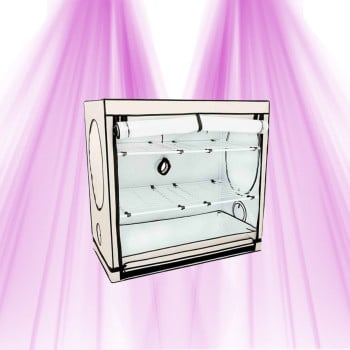
PROBOX Propagator M - 80x60x40 cm - Chambre du culture - Garden highpro
En stock · Expédié sous 24 h
63,90 € ou 3× 21,30 €

Produit ajouté au panier avec succès
Ça pousse dans le bon sens

5 produits
Les box de culture hivernage sont des espaces de culture spécialement conçus pour maintenir vos plantes en sécurité pendant les mois froids. Contrairement aux tentes de culture classiques, ces box intègrent des systèmes d'isolation renforcée et de chauffage pour garantir des températures stables même quand il gèle dehors. C'est la solution indispensable pour continuer à cultiver en intérieur quand les températures extérieures chutent sous les 10°C.
Le principal avantage d'une box hivernage, c'est son isolation thermique supérieure. Là où une tente classique laisse passer le froid, ces modèles utilisent des matériaux isolants multicouches qui maintiennent la chaleur à l'intérieur. Les parois sont généralement 30% plus épaisses qu'une box standard, avec des couches d'isolation en mousse ou en fibres techniques. Ça change tout quand votre local de culture n'est pas chauffé ou mal isolé.
L'autre point fort, c'est l'intégration native de systèmes de chauffage. Beaucoup de modèles acceptent directement les tapis chauffants au sol ou les radiateurs céramiques sans risque de surchauffe. Les ouvertures sont pensées pour éviter les ponts thermiques, avec des fermetures étanches et des manchons isolés pour les gaines. Résultat : vous gardez facilement 20-25°C à l'intérieur même avec 5°C dans la pièce.
Pour les boutures et jeunes plants, c'est franchement indispensable. Ces petites plantes sont ultra-sensibles aux variations de température et un coup de froid peut ruiner des semaines de travail. Une box hivernage crée un microclimat stable qui favorise l'enracinement et la croissance, même en plein hiver.
La taille dépend évidemment de votre espace et du nombre de plantes. Pour débuter ou faire de l'hivernage de boutures, une 60x60x140cm suffit largement. Si vous voulez maintenir des plantes mères ou faire de la croissance hivernale, partez plutôt sur du 100x100x200cm minimum. Pensez que l'isolation prend de la place : l'espace intérieur utile est réduit de 5 à 10cm sur chaque dimension.
L'isolation est le critère numéro un. Vérifiez l'épaisseur des parois (minimum 2cm pour être efficace) et le type d'isolant utilisé. Les modèles haut de gamme utilisent des isolants réfléchissants multicouches qui renvoient la chaleur vers l'intérieur. Les fermetures éclair doivent être doublées avec des rabats isolants pour éviter les fuites thermiques.
Pour le chauffage, deux écoles : les tapis chauffants au sol (plus économiques, chaleur douce) ou les radiateurs céramiques suspendus (montée en température plus rapide, meilleur contrôle). Certaines box acceptent les deux systèmes. Prévoyez aussi un thermostat digital précis - les variations de 2-3°C peuvent stresser vos plantes.
L'extraction reste cruciale même en hiver. Cherchez des modèles avec des ouvertures pré-découpées pour extracteurs 100 ou 125mm, avec des manchons isolés. Un extracteur trop puissant va aspirer tout votre air chaud, donc dimensionnez bien : 150-200m3/h maximum pour une box de 1m².
Pour l'hivernage de boutures et petites plantes, une 60x60x140cm convient parfaitement et peut accueillir 15-20 boutures en godets. Si vous voulez maintenir des plantes mères ou faire de la croissance hivernale, optez pour du 80x80x160cm minimum, voire 100x100x200cm pour plus de confort. Attention, l'isolation réduit l'espace intérieur de 5 à 10cm sur chaque dimension, donc prévoyez plus large que pour une box classique. Pour un débutant, je recommande de commencer par du 80x80cm, c'est le bon compromis entre espace utile et facilité de chauffage.
L'astuce, c'est de créer un circuit d'air fermé sans aspirer directement l'air froid extérieur. Placez votre extracteur en haut de la box avec une gaine courte qui rejette dans la même pièce, pas dehors. Pour l'admission d'air, utilisez les ouvertures basses avec des clapets anti-retour pour éviter les courants froids. Le chauffage se place idéalement au sol (tapis chauffant) ou en bas de la box (radiateur céramique) pour créer une convection naturelle. Réglez l'extraction au minimum : 50-100m3/h suffisent largement, l'objectif est juste de renouveler l'air sans perdre la chaleur.
Les deux systèmes sont complémentaires plutôt que concurrents. L'isolation renforcée est indispensable dans tous les cas - sans ça, vous allez chauffer pour rien et exploser votre facture électrique. Les tapis chauffants sont parfaits pour l'hivernage de boutures et semis : chaleur douce, consommation faible (20-50W), et ça réchauffe directement les racines. Pour des plantes plus grandes ou des températures très froides (sous 5°C), ajoutez un radiateur céramique de 100-200W. Le top, c'est une box bien isolée + tapis chauffant + petit radiateur d'appoint si besoin. Évitez les modèles "tout chauffage" sans isolation, c'est de l'argent jeté par les fenêtres.
Pour les boutures, maintenez 22-25°C au niveau du substrat avec un tapis chauffant de 20-30W sous vos bacs. L'humidité doit rester élevée (70-80%) donc utilisez un humidificateur ou des bacs d'eau. Éclairez avec des LED basse consommation 18-24h/jour les premiers jours, puis passez en 18/6. L'extraction doit être minimale : juste un petit ventilateur de brassage pour éviter la stagnation d'air. Vérifiez la température matin et soir avec un thermomètre min/max - les boutures détestent les variations. Si ça descend sous 20°C la nuit, ajoutez un petit radiateur céramique de 50W avec thermostat.
Contrôlez température et humidité 2 fois par jour avec un hygromètre digital - les variations de plus de 3°C stressent les plantes. Vérifiez que les ouvertures d'aération ne sont pas bouchées par la condensation, surtout les clapets anti-retour qui peuvent geler. Nettoyez l'humidificateur toutes les semaines pour éviter les algues et bactéries. Si vous utilisez un tapis chauffant, vérifiez qu'il n'y a pas d'eau qui stagne dessus - ça peut créer des courts-circuits. Pensez à aérer 5-10 minutes par jour quand il fait moins froid dehors, ça renouvelle l'air sans trop refroidir la box. En cas de panne de chauffage, des bouteilles d'eau chaude peuvent dépanner quelques heures.

Aide & conseils
Sur Box de culture Hivernage — cliquez une question pour voir la réponse.
Une box de culture hivernage sert principalement à protéger vos plantes du froid hivernal et à maintenir des conditions de croissance optimales lorsque les températures extérieures chutent. Elle permet de prolonger la saison de culture, de faire hiverner des plantes sensibles au gel ou de démarrer des semis précoces, en assurant une température stable et un éclairage adapté.
La principale différence réside dans leur conception et leur isolation. Une box de culture hivernage est spécifiquement conçue avec des matériaux isolants renforcés et intègre souvent des systèmes de chauffage pour maintenir une température constante, même par grand froid. Une tente de culture classique, bien qu'elle offre un environnement contrôlé, n'a généralement pas le même niveau d'isolation thermique et est moins adaptée aux conditions hivernales rigoureuses.
Pour choisir une box de culture hivernage, je vous recommande de considérer plusieurs facteurs clés : la taille adaptée à vos plantes, le niveau d'isolation thermique, la puissance du système de chauffage intégré ou la possibilité d'en ajouter un, et la qualité des matériaux. Pensez également à la facilité d'accès et à la ventilation pour éviter l'humidité stagnante. C'est un investissement qui doit correspondre à vos besoins spécifiques.
La puissance de chauffage nécessaire dépendra de la taille de votre box et de la température ambiante de la pièce où elle est installée. En général, je conseille d'opter pour un chauffage avec thermostat intégré pour réguler précisément la température. Pour une petite box, quelques dizaines de watts peuvent suffire, tandis que pour une plus grande, il faudra peut-être plusieurs centaines de watts. L'objectif est de maintenir une température stable sans surconsommer.
La température idéale dans une box de culture hivernage varie selon le type de plante que vous cultivez. En général, pour la plupart des plantes, je recommande de maintenir une température entre 18°C et 24°C. Pour l'hivernage de plantes méditerranéennes ou tropicales, une température légèrement plus fraîche, autour de 10-15°C, peut être suffisante pour les maintenir en dormance ou à un rythme de croissance ralenti.
Maintenir une bonne humidité est crucial en hiver, car le chauffage a tendance à assécher l'air. Je vous conseille d'utiliser un humidificateur d'air avec un hygrostat pour réguler le taux d'humidité. Vous pouvez aussi placer des coupelles d'eau ou des billes d'argile humides. Une bonne gestion de l'humidité évite le stress hydrique des plantes et limite l'apparition de maladies.
Une erreur fréquente est de négliger la ventilation, ce qui peut entraîner des problèmes d'humidité excessive et de moisissures. Je vois aussi souvent des cultivateurs sous-estimer l'importance d'un bon éclairage d'appoint. N'oubliez pas que même en hivernage, vos plantes ont besoin de lumière. J'explique plus en détail comment choisir l'éclairage dans cet article.
Si votre box n'est pas spécifiquement conçue pour l'hivernage, vous pouvez l'isoler en ajoutant des couches de matériaux isolants comme du polystyrène extrudé ou de la mousse isolante sur les parois extérieures. Veillez à bien sceller les joints pour éviter les ponts thermiques. C'est une solution efficace pour réduire les pertes de chaleur et optimiser l'efficacité de votre système de chauffage.
Vous ne trouvez pas votre réponse ? 01 88 33 45 52 ou par message.

Satisfait ou remboursé
14 jours

Livraison offerte
dès 89€*

Livraison
24 à 48H

Paiement
sécurisé

Facilités de
paiement

Meilleurs prix
garantis

Garantie
GrowLED

Points de
fidélité