

































































Eazy Plug
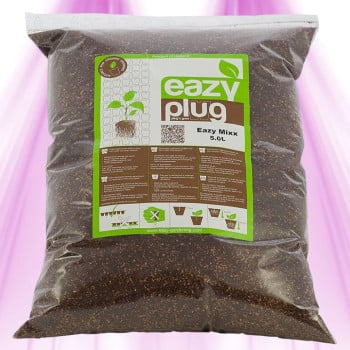
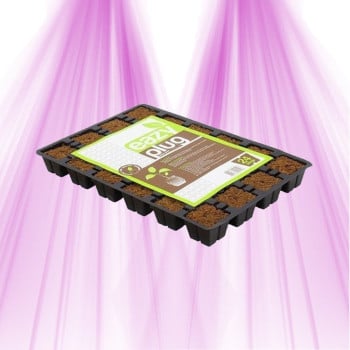
Eazy Plug - Block Cube de Coco - Idéal pour Germination et Semis - 7.5x7.5x6cm
En stock · Expédié sous 24 h
1,99 €

Produit ajouté au panier avec succès
Ça pousse dans le bon sens

9 produits
Les substrats de bouturage et substrats spécialisés sont la fondation de toute culture indoor réussie. Que vous démarriez des boutures, prépariez vos semis ou cherchiez à améliorer le drainage de vos mélanges, ces matériaux techniques offrent des propriétés uniques que la terre classique ne peut pas apporter. Chaque substrat a ses spécificités : rétention d'eau, aération, pH neutre, capacité d'enracinement.
Dans une installation de culture indoor, maîtriser ces substrats fait la différence entre des plants qui végètent et des cultures qui explosent. La laine de roche excelle pour l'hydroponie, la perlite améliore le drainage, la vermiculite retient l'humidité, et les cubes de coco offrent un équilibre parfait pour le bouturage.
Franchement, utiliser des substrats adaptés change complètement la donne. La laine de roche, par exemple, maintient un ratio air/eau de 95/5% qui favorise un développement racinaire explosif. Son pH neutre (6,5-7) évite les blocages nutritifs qu'on retrouve souvent avec des terreaux mal équilibrés.
La perlite, ces petites billes blanches volcaniques, améliore le drainage de 40% par rapport à un terreau standard. Mélangée à 20-30% dans vos substrats, elle évite le compactage et l'asphyxie racinaire. C'est particulièrement crucial dans les pots de petit volume où chaque centimètre cube compte.
Pour le bouturage, les cubes de tourbe et les plugs en laine de roche maintiennent l'humidité constante nécessaire à l'enracinement. Le taux de réussite passe facilement de 60% avec des méthodes artisanales à plus de 90% avec ces supports techniques.
Le choix dépend de votre méthode de culture et de vos objectifs. Pour l'hydroponie pure, orientez-vous vers la laine de roche en cubes de 7,5x7,5cm ou en plaques. Sa structure fibreuse retient juste ce qu'il faut d'eau sans saturer les racines.
Si vous travaillez en terre, la vermiculite (granulométrie 2-3mm) améliore la rétention d'eau de vos mélanges. Comptez 10-15% du volume total. À l'inverse, la perlite (grade 2-5mm) allège les substrats lourds et améliore l'oxygénation racinaire.
Pour le bouturage spécifiquement, les cubes de tourbe de 3x3cm ou 4x4cm offrent le meilleur compromis. Leur pH légèrement acide (5,5-6) stimule l'enracinement, et leur structure se décompose progressivement sans choquer les jeunes racines lors du repiquage.
La fibre de coco, souvent négligée, présente un excellent ratio carbone/azote et une capacité de rétention d'eau de 8-10 fois son poids sec. Parfaite pour les mélanges maison ou comme amendement dans vos terreaux existants.
Absolument, c'est même crucial. La laine de roche sort d'usine avec un pH souvent supérieur à 8, ce qui bloque l'assimilation des nutriments. Trempez vos cubes 24h dans une solution à pH 5,5-6 avant utilisation. Ce prétraitement stabilise le pH et élimine les poussières résiduelles qui peuvent obstruer les systèmes d'irrigation. Une fois rincée, la laine de roche conserve un pH stable pendant toute la culture.
Ces deux minéraux expansés ont des rôles opposés mais complémentaires. La perlite améliore le drainage et l'aération grâce à sa structure poreuse qui ne retient pas l'eau. Elle allège les substrats lourds et évite le compactage. La vermiculite, au contraire, absorbe et retient l'eau comme une éponge tout en libérant progressivement potassium et magnésium. En pratique, mélangez 20% de perlite pour améliorer le drainage, ou 10-15% de vermiculite pour augmenter la rétention d'eau.
Ça dépend du type de substrat. La laine de roche se dégrade après 2-3 cycles et accumule les sels, mieux vaut la renouveler. La perlite, elle, est quasi indestructible : un bon rinçage à l'eau claire entre chaque culture suffit, vous pouvez la réutiliser 5-6 fois facilement. La vermiculite se compacte avec le temps et perd ses propriétés après 2 cycles maximum. Les cubes de tourbe sont à usage unique car ils se décomposent naturellement.
C'est même recommandé pour créer des mélanges sur-mesure ! Un mix classique : 40% terreau de base, 30% fibre de coco, 20% perlite et 10% vermiculite donne un substrat équilibré pour la plupart des cultures. Pour le bouturage, essayez 50% tourbe blonde, 30% vermiculite fine et 20% perlite fine. L'important est de tester le pH final du mélange et d'ajuster si nécessaire. Ces mélanges maison coûtent souvent 30-40% moins cher que les substrats tout prêts.
La stérilisation élimine champignons, bactéries et parasites qui peuvent ruiner vos cultures. Pour de petites quantités, 15 minutes au four à 80°C suffisent - attention à ne pas dépasser cette température qui détruirait les propriétés de certains substrats. L'eau bouillante fonctionne aussi : versez-la sur le substrat, mélangez et laissez refroidir. Pour les gros volumes, l'autocuiseur reste la méthode la plus efficace : 20 minutes à 120°C. La perlite et la vermiculite supportent bien ces traitements, contrairement aux substrats organiques qui peuvent perdre leurs nutriments.
Existe en 3 modèles
Existe en 3 modèles
Aide & conseils
Sur Substrats divers/bouturage — cliquez une question pour voir la réponse.
Pour choisir le meilleur substrat, je vous conseille de définir d'abord vos objectifs : bouturage, semis, culture en pleine croissance, ou amélioration du drainage. Chaque substrat a ses forces. Par exemple, pour les semis et boutures, je privilégie souvent des substrats très fins et aérés. Si vous débutez, un mélange prêt à l'emploi peut être une excellente option pour simplifier les choses.
La différence est significative ! La fibre de coco est un substrat inerte, ce qui signifie qu'elle ne contient pas de nutriments par elle-même. Elle excelle par sa capacité à retenir l'eau tout en assurant une excellente aération des racines. La terre, ou terreau, est un substrat vivant qui contient des nutriments et une microfaune. En pratique, la coco demande une gestion plus précise des apports nutritifs, mais offre un contrôle total sur l'environnement racinaire, ce que j'apprécie particulièrement en culture indoor intensive. J'ai d'ailleurs rédigé un article sur les alternatives à la tourbe qui aborde ce sujet : Stop à la tourbe : découvrez les 4 meilleurs substrats écologiques.
Un substrat de bouturage est spécifiquement conçu pour favoriser l'enracinement rapide et sain de vos jeunes pousses. Il est généralement très léger, aéré et retient juste ce qu'il faut d'humidité. Je l'utilise en remplissant des petits godets ou des cubes de laine de roche, puis j'y insère délicatement la bouture après l'avoir éventuellement trempée dans un gel d'enracinement. L'objectif est de créer un environnement stable et humide pour les premières racines, sans excès d'eau qui pourrait provoquer la pourriture.
Pour un excellent drainage et une aération optimale, je me tourne souvent vers des substrats comme la perlite, la vermiculite ou la fibre de coco. La perlite, avec sa structure poreuse, est fantastique pour alléger un mélange et améliorer le flux d'air autour des racines. La fibre de coco offre un bon équilibre entre rétention d'eau et aération. Je recommande même de les mélanger avec un terreau si vous voulez créer un substrat maison parfaitement équilibré. C'est un point crucial pour éviter l'asphyxie racinaire, une erreur que je vois malheureusement trop souvent.
L'erreur la plus courante, selon mon expérience, est de sous-estimer l'importance du drainage et de l'aération. Un substrat trop compact ou qui retient trop d'eau va étouffer les racines, entraînant des problèmes de croissance et des maladies. Je vois aussi souvent des débutants utiliser un terreau de jardin classique, trop lourd pour la culture en pot. Il faut privilégier des substrats légers et bien structurés, adaptés aux contraintes de la culture indoor.
La laine de roche et la fibre de coco sont toutes deux des substrats inertes et populaires en hydroponie, mais elles ont des caractéristiques distinctes. La laine de roche est un matériau minéral, fabriqué à partir de roche volcanique fondue, offrant une excellente rétention d'eau et une aération constante. Elle est souvent utilisée pour le démarrage des semis et boutures en cubes. La fibre de coco, elle, est un produit organique dérivé de la noix de coco, avec une structure plus fibreuse et une capacité de tamponnage naturel. Je trouve que la coco est plus indulgente pour les débutants car elle pardonne mieux les erreurs d'arrosage, tandis que la laine de roche demande une gestion plus précise des nutriments et de l'humidité.
Pour améliorer la rétention d'eau de votre substrat, je vous recommande principalement la vermiculite ou la fibre de coco. La vermiculite est un minéral qui agit comme une éponge, absorbant l'eau et la libérant progressivement aux racines. La fibre de coco a également une excellente capacité de rétention d'eau tout en maintenant une bonne aération. Je les incorpore souvent dans des mélanges pour les plantes qui ont besoin d'une humidité plus constante, ou pour réduire la fréquence d'arrosage.
Vous ne trouvez pas votre réponse ? 01 88 33 45 52 ou par message.

Satisfait ou remboursé
14 jours

Livraison offerte
dès 89€*

Livraison
24 à 48H

Paiement
sécurisé

Facilités de
paiement

Meilleurs prix
garantis

Garantie
GrowLED

Points de
fidélité