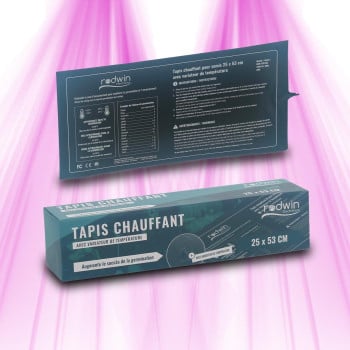
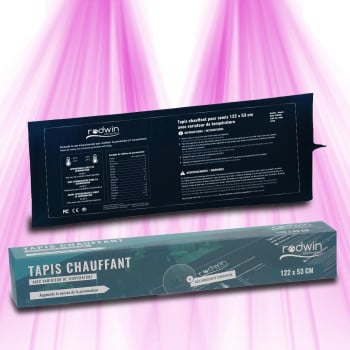
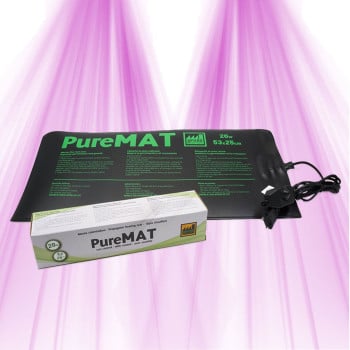
Tapis Chauffant : La Chaleur Douce pour Vos Semis et Boutures
Un tapis chauffant, c'est la base pour réussir ses semis et boutures en culture indoor. Cette plaque chauffante se place sous vos bacs de germination pour maintenir une température stable au niveau racinaire, entre 20 et 25°C généralement. Franchement, c'est le petit détail qui fait toute la différence entre des graines qui traînent à germer et une levée homogène en 3-5 jours.
Le principe est simple mais redoutable : la chaleur par le bas stimule l'activité racinaire et accélère la germination. Vos plantules développent un système racinaire plus dense, plus rapidement. Et contrairement au chauffage ambiant qui peut assécher l'air, le tapis chauffant maintient l'humidité du substrat tout en apportant cette chaleur douce si importante.
Pourquoi choisir un tapis chauffant pour votre espace de culture
La température du sol influence directement la vitesse de germination. Avec un tapis chauffant, vous passez de 10-15 jours d'attente à 3-7 jours selon les variétés. C'est particulièrement flagrant pour les graines qui ont besoin de chaleur constante. Le tapis maintient cette température stable 24h/24, même si votre pièce de culture descend la nuit.
L'autre gros avantage, c'est l'économie d'énergie. Plutôt que de chauffer tout l'espace avec un radiateur soufflant qui consomme 1500-2000W, un tapis de 50x35cm ne tire que 17-25W. Vous chauffez uniquement là où c'est nécessaire. Et niveau sécurité, les modèles récents sont étanches (IP67) et supportent l'humidité sans broncher.
Pour le bouturage, c'est encore plus parlant. Les hormones racinaires s'activent mieux avec cette chaleur douce par le bas. Vos boutures s'enracinent plus vite et avec un taux de réussite bien supérieur. Que ce soit dans la laine de roche, la tourbe ou les cubes de coco, le tapis chauffant optimise les conditions racinaires.
Comment bien choisir votre tapis chauffant
La taille, c'est le premier critère. Mesurez vos bacs de semis ou vos plateaux de bouturage. Un tapis de 40x60cm couvre généralement 2-3 bacs standards. Pour une mini-serre de propagation, un modèle 25x35cm suffit largement. L'idée, c'est que le tapis couvre au moins 80% de la surface du contenant.
Côté puissance, comptez environ 10-15W par dm². Un tapis de 50x35cm (17,5 dm²) développe donc 17-25W, ce qui est parfait pour maintenir 22-24°C au niveau des racines. Les modèles plus puissants (30-40W) sont utiles si votre local est vraiment froid ou mal isolé.
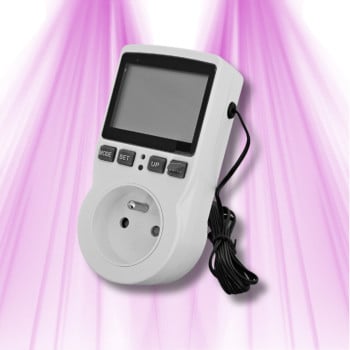
Le thermostat intégré, c'est un plus non négligeable. Vous réglez la température souhaitée et le tapis se coupe automatiquement quand c'est atteint. Sinon, un thermostat externe avec sonde fait très bien l'affaire. L'étanchéité est cruciale : vérifiez la certification IP65 minimum, IP67 c'est encore mieux pour résister aux projections d'eau.
Dernière chose : l'épaisseur. Les tapis fins (2-3mm) se glissent partout mais sont plus fragiles. Les modèles de 5-7mm d'épaisseur durent plus longtemps et répartissent mieux la chaleur. Question de budget et d'usage.
Questions fréquentes
Quelle puissance de tapis chauffant choisir pour mes semis en mini-serre ?
Pour une mini-serre standard (60x40cm), un tapis de 17-25W suffit largement. Comptez 10-12W par dm² de surface à chauffer. Si votre mini-serre fait 24 dm², un tapis de 25W maintient facilement 22-24°C au niveau des semis. Les modèles plus puissants (30-40W) ne sont utiles que si votre local descend sous 15°C la nuit. L'important, c'est la régularité de la température, pas la puissance brute.
Faut-il coller le tapis directement sur la vitre ou mettre une cale pour l'installation ?
Jamais directement sur du verre ! Placez toujours une cale de 2-3mm (plaque de polystyrène, carton épais) entre le tapis et la surface vitrée. Le verre conduit trop bien la chaleur et crée des points chauds qui peuvent endommager le tapis. Sur une étagère métallique ou en bois, le contact direct ne pose pas de problème. L'idée, c'est d'éviter les matériaux trop conducteurs qui créent des zones de surchauffe.
Est-ce qu'un tapis chauffant avec thermostat est nécessaire ou un modèle simple suffit ?
Le thermostat intégré facilite vraiment la vie, surtout pour les débutants. Vous réglez à 22°C et c'est parti. Sans thermostat, il faut surveiller avec un thermomètre et débrancher manuellement si ça chauffe trop. Un thermostat externe avec sonde coûte 15-20€ et fait le même boulot qu'un modèle intégré. Question de budget : si la différence de prix est faible, prenez le thermostat intégré. Sinon, un modèle simple + thermostat externe, ça marche très bien.
Comment utiliser un tapis chauffant sous un plateau de culture sans trop condenser ?
La condensation vient du différentiel de température entre le substrat chaud et l'air plus frais. Placez le tapis sous le plateau, pas directement sous les pots. Laissez 1-2cm d'air entre le plateau et le tapis pour une diffusion plus homogène. Aérez régulièrement votre espace de semis, même 5 minutes par jour. Si vous utilisez un couvercle transparent, entrouvrez-le légèrement pour évacuer l'excès d'humidité. L'objectif : 70-80% d'humidité, pas 95%.
Les tapis chauffants assèchent-ils la terre et comment les entretenir pour éviter ça ?
Un tapis bien utilisé n'assèche pas plus que ça. Le problème vient souvent d'un réglage trop chaud (au-dessus de 26°C) ou d'un contact direct avec les pots. Maintenez 22-24°C maximum et vérifiez l'humidité du substrat quotidiennement. Pour l'entretien, nettoyez le tapis avec un chiffon humide, jamais d'eau directe même s'il est étanche. Vérifiez le câble d'alimentation régulièrement et stockez-le à plat, jamais plié. Un bon tapis dure 5-8 ans avec ces précautions simples.