Accessoires d'irrigations : tout pour un système d'arrosage automatique au top
Les accessoires d'irrigations sont les petites pièces qui font toute la différence dans un système d'arrosage automatique. Bouchons, raccords, coudes, goutteurs... ces composants permettent de créer un réseau d'irrigation sur mesure qui distribue l'eau exactement où il faut, quand il faut. Que tu montes ton premier système ou que tu perfectionnes une installation existante, chaque accessoire a son rôle pour optimiser l'arrosage de tes plantes.
Pourquoi choisir des accessoires d'irrigations de qualité
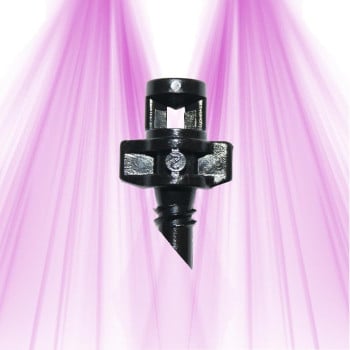
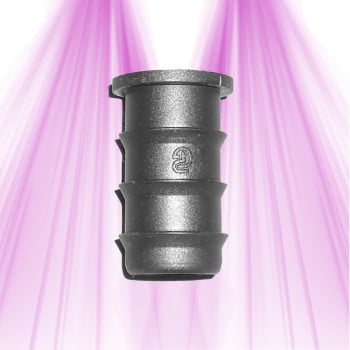
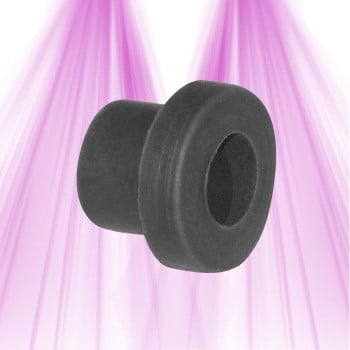
Un système d'irrigation, c'est comme un puzzle : chaque pièce doit s'emboîter parfaitement. Les accessoires de mauvaise qualité, ça fuit, ça se bouche, ça lâche au mauvais moment. Avec des composants fiables, tu peux créer des circuits complexes sans stress. Le BOUCHON CAN 16MM SERIE E par exemple, termine proprement tes lignes principales sans risque de fuite. Pour la micro-irrigation, le SPRAYER MINIJET 360° 4MM diffuse l'eau sur 360° avec un débit régulier, parfait pour arroser uniformément autour de chaque plante.
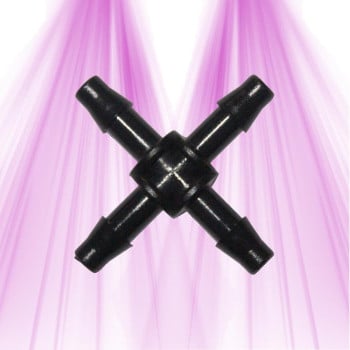
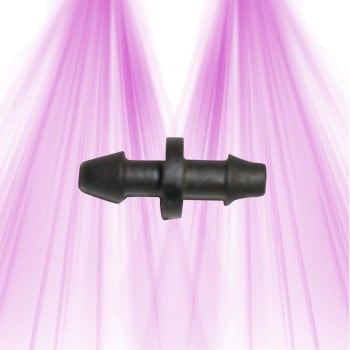
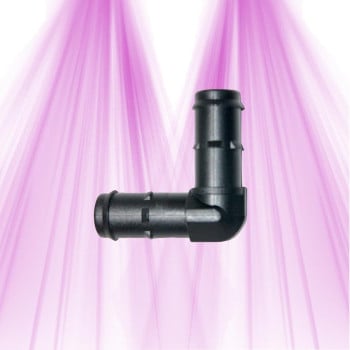
La modularité, c'est le gros avantage de ces systèmes. Tu peux commencer simple avec quelques goutteurs et évoluer vers un réseau sophistiqué. Les raccords comme le Connecteur X DE 4 MM permettent de créer des dérivations pour alimenter plusieurs zones depuis une ligne principale. Et quand tu dois contourner un obstacle, le COUDE DE 4MM / L DE 4 MM change la direction du flux sans perte de pression.
Comment bien choisir tes accessoires d'irrigations
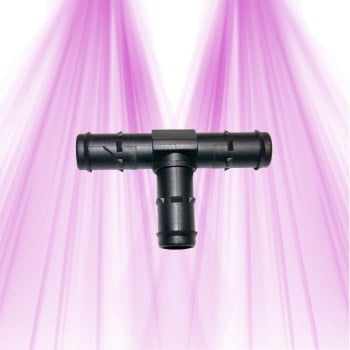
Le diamètre, c'est la base. Les tuyaux principaux font généralement 16mm, parfaits pour alimenter plusieurs zones. Les capillaires de 4mm partent ensuite vers chaque plante. Cette différence de diamètre crée une pression optimale : forte dans le circuit principal, modérée au niveau des goutteurs. Le TUBE DRIP 4-6MM SEMI RIGIDE PRÉDÉCOUPÉ facilite l'installation avec ses perforations déjà faites tous les 20cm.
Pour le type de goutteurs, tout dépend de tes besoins. Les goutteurs à débit fixe (2L/h ou 4L/h) conviennent pour des plantes aux besoins similaires. Les réglables permettent d'adapter le débit plante par plante. Les autorégulants maintiennent un débit constant même avec des variations de pression - pratique sur de longues lignes.
Pense aussi aux accessoires de finition : bouchons pour fermer les lignes, filtres pour éviter les bouchages, réducteurs de pression si ton réseau est trop puissant. Un système bien conçu, c'est un système qui fonctionne des mois sans intervention.
Questions fréquentes
Quel diamètre de tuyau et quels raccords dois-je choisir pour mon système d'irrigation ?
Pour un système classique, utilise du 16mm pour les lignes principales et du 4mm pour les capillaires vers chaque plante. Le 16mm supporte une pression plus élevée et alimente plusieurs dérivations sans perte de débit. Les raccords 4mm se connectent facilement sur le tuyau principal avec des perce-tuyaux spéciaux. Cette combinaison 16mm/4mm est le standard qui fonctionne dans 90% des installations indoor.
Comment relier ma réserve d'eau ou mon récupérateur d'eau de pluie aux accessoires d'irrigation ?
Commence par installer un robinet ou une vanne sur ta réserve, puis connecte un tuyau d'arrosage classique jusqu'à ton espace de culture. À l'entrée de la zone, place un réducteur de pression (1-2 bars maximum) et un filtre pour éviter les impuretés. Ensuite, raccorde ton tuyau principal 16mm avec un connecteur adapté. Si ta réserve est en hauteur, la gravité peut suffire, sinon une petite pompe de circulation fera l'affaire.
Quelle est la différence entre les goutteurs autorégulants, réglables et à débit fixe ?
Les goutteurs à débit fixe délivrent toujours le même volume (2L/h, 4L/h, 8L/h) quelle que soit la pression - simples et fiables. Les réglables permettent de modifier le débit de 0 à 70L/h environ, parfait pour adapter l'arrosage selon la taille des plantes. Les autorégulants maintiennent un débit constant même si la pression varie dans le réseau, idéal pour les longues lignes où la pression chute en bout de circuit. Pour débuter, les goutteurs fixes 4L/h conviennent à la plupart des situations.
Comment installer et fixer correctement les goutteurs et le tubing sur mon tuyau principal ?
Utilise un perce-tuyau spécial pour faire des trous propres de 4mm dans ton tuyau 16mm. Enfonce fermement le connecteur du capillaire - il doit faire un petit "clic" quand il se verrouille. Pour fixer le tuyau principal, utilise des clips de fixation tous les 50cm environ, ça évite qu'il bouge et tire sur les connexions. Les capillaires se posent au sol ou se fixent avec des piquets près de chaque plante. Teste toujours ton installation à faible pression avant de monter au débit final.
Quels accessoires (filtres, réducteurs de pression, raccords) sont nécessaires pour éviter le bouchage de mon système ?
Un filtre en tête de réseau est indispensable, même avec de l'eau du robinet - les particules de calcaire peuvent boucher les goutteurs. Choisis un filtre 120 mesh minimum (125 microns). Le réducteur de pression évite que les goutteurs explosent ou fuient - règle-le entre 1 et 2 bars maximum. Pour l'entretien, prévois des bouchons de nettoyage en bout de ligne pour faire des rinçages périodiques. Un programmateur avec fonction rinçage automatique, c'est le top pour maintenir le système propre sans effort.