Éclairage LED à Spectre Ajustable : Contrôlez Précisément Votre Culture Indoor
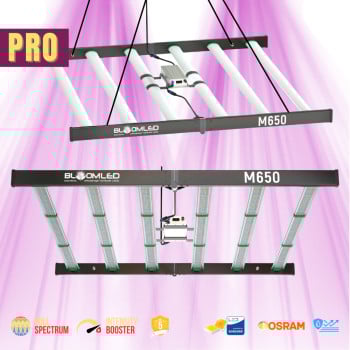
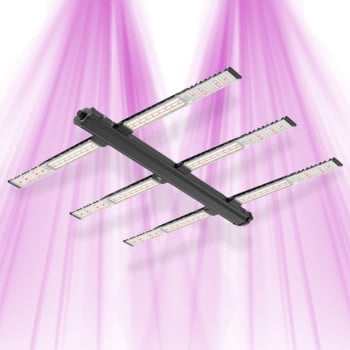
L'éclairage LED à spectre ajustable révolutionne la culture indoor en vous donnant un contrôle total sur les longueurs d'onde diffusées. Contrairement aux lampes HPS traditionnelles qui émettent un spectre fixe, ces systèmes permettent de moduler indépendamment les LED bleues (400-500nm) et rouges (600-700nm) selon les besoins spécifiques de vos plantes. C'est la technologie qui fait la différence entre une culture basique et une optimisation poussée des rendements.
Pourquoi choisir un éclairage à spectre ajustable
Le principal avantage réside dans l'adaptation précise aux phases de développement. En croissance végétative, vous poussez le spectre bleu (6400K) pour favoriser un développement compact et vigoureux des tiges. En floraison, vous basculez vers le rouge profond (2700K) qui stimule la production de résine et la formation des têtes. Cette flexibilité permet d'augmenter les rendements de 15 à 25% comparé à un spectre fixe, tout en réduisant la consommation électrique de 40% par rapport aux HPS équivalentes.
L'autre point fort, c'est la durabilité. Les LED de qualité tiennent facilement 50 000 heures contre 10 000 pour une HPS. Ça représente plusieurs années de culture sans changement d'ampoule. Et niveau chaleur, on passe de 400W de dégagement thermique avec une HPS 600W à seulement 150W avec une LED spectre ajustable équivalente. Votre système de ventilation vous remerciera.
Comment bien choisir votre éclairage à spectre ajustable
Premier critère : la puissance réelle. Méfiez-vous des watts "équivalents" marketing. Une bonne LED spectre ajustable de 240W réels couvre efficacement 80x80cm en floraison. Pour du 120x120cm, visez plutôt 400-500W réels. Vérifiez aussi l'efficacité lumineuse exprimée en µmol/J - comptez minimum 2,5 µmol/J pour du matériel récent.
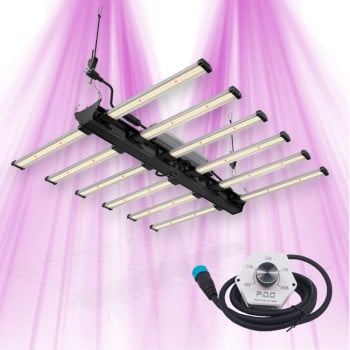
Côté contrôle, privilégiez les modèles avec variateurs séparés pour chaque spectre. Les versions avec télécommande ou contrôle smartphone apportent un vrai confort d'usage. Attention à la qualité des drivers : Samsung, Meanwell ou Osram sont des gages de fiabilité. Pour l'installation, vérifiez que le système inclut les suspensions réglables et que le câblage est aux normes européennes.
Questions fréquentes
Quelle hauteur dois-je respecter entre ma lampe spectre ajustable et les plantes pour éviter les brûlures ?
La distance optimale dépend de la puissance et du stade de développement. Pour une LED 240W, maintenez 40-50cm en croissance et 30-35cm en floraison. Avec une 400W, comptez 50-60cm en croissance et 40-45cm en floraison. Le truc, c'est d'observer vos plantes : si les feuilles du sommet se recroquevillent ou blanchissent, vous êtes trop près. Utilisez un luxmètre si possible - visez 35 000-45 000 lux en floraison.
Comment régler le spectre bleu/rouge pour la phase de croissance végétative avec ce modèle ?
En croissance, poussez le spectre bleu à 80-100% et limitez le rouge à 20-30%. Cette configuration favorise un développement compact avec des entre-nœuds courts. Les plantes restent trapues et développent un système racinaire robuste. Évitez de couper complètement le rouge car il participe à l'élongation cellulaire nécessaire. Après 3-4 semaines de croissance, vous pouvez commencer à augmenter progressivement le rouge pour préparer la transition floraison.
Quelle est la différence entre vos spectres ajustables et les LED HPS classiques en termes de consommation ?
Une LED spectre ajustable de 300W remplace efficacement une HPS 600W, soit 50% d'économie directe. Mais c'est sans compter la réduction du système de refroidissement : une HPS 600W dégage 600W de chaleur, contre 180W pour la LED équivalente. Au final, vous économisez facilement 60-70% sur la facture électrique. Sur une culture de 4 mois, ça représente 200-300€ d'économie selon votre tarif kWh.
Comment installer et câbler un spectre ajustable dans ma tente de culture indoor ?
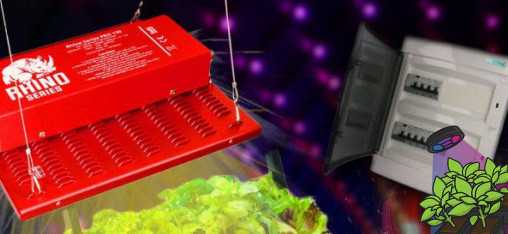
L'installation est plus simple qu'une HPS car pas de ballast externe. Fixez d'abord les crochets de suspension au plafond de la tente, puis accrochez la LED avec les sangles réglables fournies. Côté électrique, branchez directement sur une prise 220V - les drivers sont intégrés. Vérifiez que votre installation supporte la charge et utilisez un disjoncteur dédié. Pour les modèles avec contrôleur déporté, placez-le à l'extérieur de la tente pour éviter l'humidité.
Faut-il nettoyer les LED d'un spectre ajustable et à quelle fréquence pour maintenir l'efficacité ?
Un nettoyage mensuel suffit largement. Utilisez un chiffon microfibre légèrement humide pour enlever la poussière des dissipateurs et des optiques. Évitez les produits chimiques qui pourraient endommager les revêtements. La poussière réduit l'efficacité de 5-10% et peut provoquer une surchauffe des LED. Profitez du nettoyage pour vérifier l'état des câbles et des connexions. Une LED bien entretenue garde 90% de sa puissance initiale après 5 ans d'usage.