



























































Gorilla Grow Tent
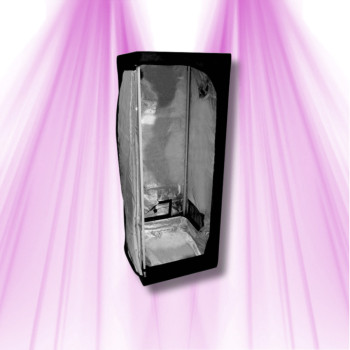
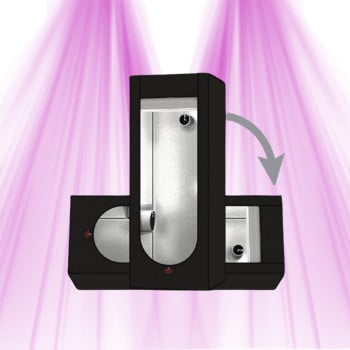
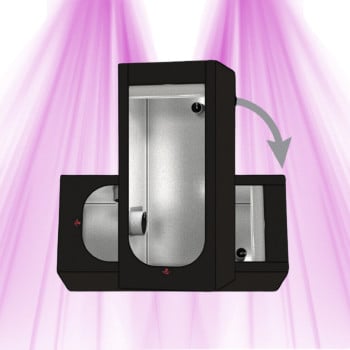
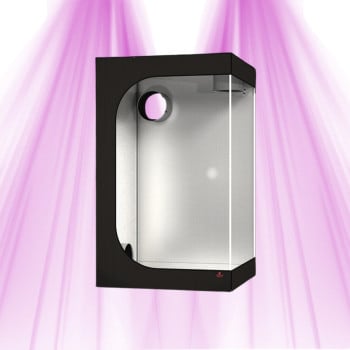
Gorilla Grow Tent Shorty Indoor – chambre de culture 60x75x150/170 cm
Existe en 2 modèles
En stock · Expédié sous 24 h
163,90 € 329,00 € ou 3× 54,63 €

Produit ajouté au panier avec succès
Ça pousse dans le bon sens

Choisis ta surface, puis compare les niveaux d’équipement.
Trouver mon pack → Des solutions complètes, prêtes à installerAccède directement aux packs adaptés à ta pièce.
21 produits
60x60cm grow tents are the perfect entry-level size for anyone looking to start indoor cultivation without taking up too much space. With their compact dimensions of 60 centimeters per side, these grow tents easily fit into a closet, a spare room, or even a corner of a living room. It's the ideal size to test, learn, and master the basics before moving on to something larger.
Frankly, when you're starting out in indoor cultivation, there's no need to go too big. A 60x60cm grow tent offers a space of 0.36 m² that allows you to comfortably grow 1 to 4 plants depending on the technique used. This is sufficient to get a feel for managing lighting, ventilation, and growth cycles. The advantage is that the initial investment remains reasonable: less electricity consumed, a less powerful extractor needed, and a controlled lighting budget.
These dimensions also allow for simpler environmental management. With a volume of approximately 0.6 m³ (for a standard height of 160cm), it's easier to maintain stable temperature and humidity. Variations are less significant than in larger volumes, which is more forgiving of beginner mistakes. And in terms of discretion, it's hard to do better: these tents go unnoticed even in a small apartment.
Height is the first criterion to consider. Standard models are 160cm tall, but you can also find 140cm or 180cm. For varieties that stretch a lot, opt for 180cm. Remember that you need to deduct space for lighting (30-40cm from the ceiling) and maintain a safe distance from the plants (20-30cm minimum).
The thickness of the fabric also matters. 210D minimum is decent for beginners. 600D or more is sturdy and will last for years. Check that the seams are reinforced and the zippers are strong – they will be used often. Openings for ducts are essential: at least one at the top for extraction and one at the bottom for passive intake.
Regarding the structure, metal bars with a minimum diameter of 16mm ensure good stability. Some models offer 19mm, which is even better for supporting the weight of lighting and accessories. Reinforced plastic connectors hold up better over time than basic connectors.
It completely depends on your cultivation technique. In SOG (Sea of Green), you can easily fit 9 to 16 small plants in 3-6 liter pots. In SCROG (Screen of Green), 1 to 4 plants are sufficient with 11-15 liter pots and a trellising net. For classic LST, count a maximum of 2 to 4 plants in 7-11 liter pots. The important thing is to allow air to circulate between the plants and avoid overcrowding, which promotes stagnant humidity.
For a 60x60cm grow tent, 7 to 11 liter pots represent the best compromise. 7L pots are perfect for 4 plants with a short cycle. 11L pots allow for optimal root development for 2-3 plants with longer cycles. Avoid pots that are too large (15L and more) which waste space, or too small (less than 5L) which limit the plants' potential. Square pots optimize space better than round ones in this compact size.
For a 100-150W LED (typical power for this size), maintain a distance of 30-40cm during growth and 20-30cm during flowering. With a 160cm high tent, this leaves 120-130cm of usable space for the plants. Use a lux meter or the PPFD Meter app to ensure you are between 200-400 µmol/m²/s during growth and 400-600 µmol/m²/s during flowering. Adjust the height according to the plants' reaction: if they stretch, move the LED closer; if the leaves yellow or curl, move it further away.
For a 60x60cm grow tent, an extractor of 150-250 m³/h is more than sufficient. Place it at the top of the tent, opposite the passive intake which is at the bottom. Use 100 or 125mm diameter ducts depending on your extractor. Avoid 90° elbows which reduce airflow; prefer gentle curves. Passive intake is done through an opening at the bottom, on the opposite side, with a surface area of approximately 1.5 times that of the extraction. Add a carbon filter if necessary, but be mindful of the weight in this compact size.
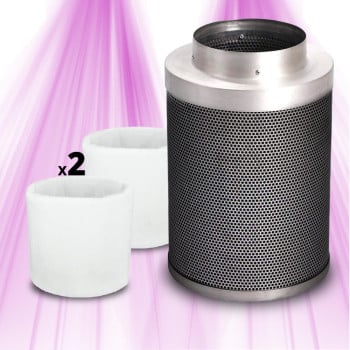
A 150-200 m³/h extractor coupled with a carbon filter of the same flow rate is perfectly suitable. For this reduced volume (0.6 m³), air renewal happens quickly. Choose a compact filter of 100-125mm in diameter so as not to overload the structure. An oscillating fan of 15-20cm ensures essential internal air circulation. For acoustic discretion, opt for EC extractors or those with a dimmer to reduce noise, especially at night. A soundproofing box can be useful in an apartment.
Existe en 2 modèles
Existe en 3 modèles
Existe en 19 modèles
Existe en 5 modèles
Existe en 2 modèles
Existe en 3 modèles
Existe en 2 modèles
Aide & conseils
Sur 60cm x 60cm — cliquez une question pour voir la réponse.
Pour une box de 60x60cm, je recommande généralement une puissance LED comprise entre 100W et 150W réels. Cela permet d'assurer une couverture lumineuse homogène et suffisante pour le cycle complet de vos plantes, de la croissance à la floraison. En dessous, vous risquez de manquer de lumière, et au-delà, vous pourriez gaspiller de l'énergie et générer trop de chaleur pour un espace aussi compact.
La distance idéale dépend beaucoup du modèle de votre lampe LED et de la phase de croissance de vos plantes. En général, je conseille de commencer à 40-50 cm des jeunes pousses et de réduire progressivement cette distance à 25-35 cm pendant la floraison. L'observation de vos plantes est essentielle : si les feuilles jaunissent ou se recroquevillent, la lumière est trop intense ; si elles s'étirent, elle est trop faible ou trop éloignée.
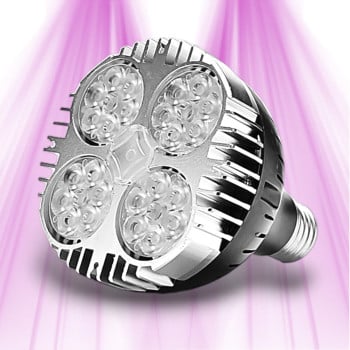
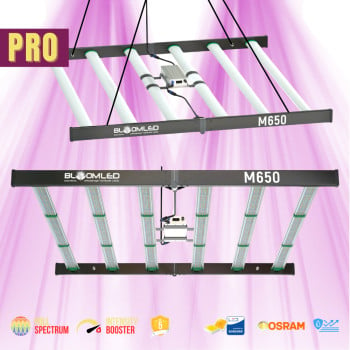
Pour une box 60x60cm, je privilégie les panneaux LED de type Quantum Board ou les barres LED. Ces technologies offrent une excellente répartition lumineuse et un spectre complet adapté à toutes les phases de la plante. Je vous conseille de rechercher des modèles avec des puces de qualité (Samsung, Osram) et un bon PPFD (densité de flux de photons photosynthétiques) pour cette surface. C'est un investissement qui en vaut la peine pour la qualité de votre récolte.
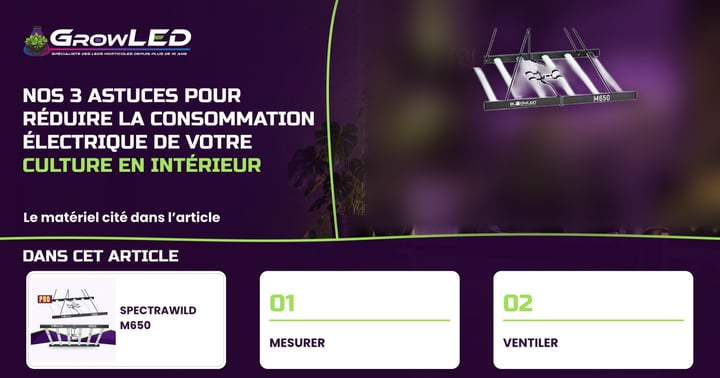
La différence est majeure, surtout pour une petite box comme la 60x60cm. Les LED sont beaucoup plus efficaces énergétiquement, produisent moins de chaleur et ont une durée de vie bien plus longue que les HPS. Pour un espace compact, la faible émission de chaleur des LED est un atout indéniable, facilitant la gestion de la température. Les HPS, bien que puissantes, seraient trop chaudes et énergivores pour cette taille, rendant le contrôle climatique très difficile. J'aborde la consommation électrique plus en détail dans cet article sur la réduction de la consommation électrique.
Une bonne ventilation est cruciale, même dans une petite box. Pour une 60x60cm, je recommande un extracteur d'air ayant un débit d'environ 100-150 m³/h, couplé à un intracteur passif (une simple ouverture) ou actif (un petit ventilateur) si la température est un problème. N'oubliez pas un petit ventilateur à clip pour brasser l'air à l'intérieur de la box, cela renforce les tiges et prévient les poches d'humidité. C'est un élément souvent sous-estimé mais vital pour la santé de vos plantes.
L'erreur la plus courante que je vois est de négliger la gestion de l'environnement. Une box 60x60cm est un petit écosystème qui peut vite devenir instable. Évitez de sous-estimer la ventilation et l'extraction, même si les LED chauffent moins que les HPS. Ne surchargez pas non plus la box avec trop de plantes ; pour cette taille, 1 à 2 plantes (voire 3 petites) sont un maximum pour optimiser l'espace et la lumière. Enfin, ne négligez pas la qualité de votre substrat, un aspect crucial que j'aborde dans cet article sur les substrats écologiques.
Vous ne trouvez pas votre réponse ? 01 88 33 45 52 ou par message.

Satisfait ou remboursé
14 jours

Livraison offerte
dès 89€*

Livraison
24 à 48H

Paiement
sécurisé

Facilités de
paiement

Meilleurs prix
garantis

Garantie
GrowLED

Points de
fidélité